Hanoi vs HCMC: Which Real Estate Market Is Leading?
2026 presents a fascinating competition between Vietnam's two largest real estate markets. While Hanoi records impressive price growth and strong liquidity, Ho Chi Minh City is recovering more slowly but on a more sustainable footing.
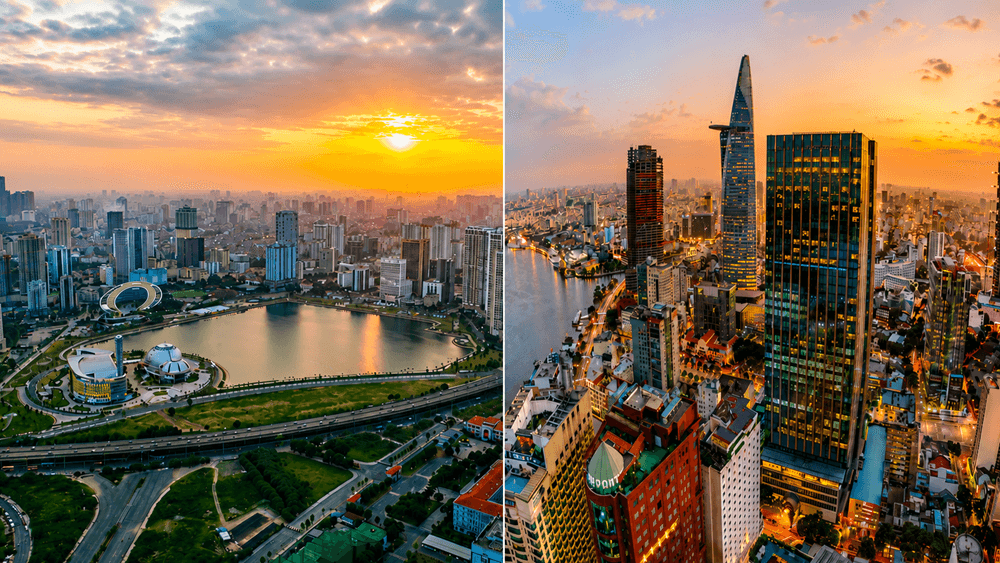
If 2024–2025 saw Hanoi stand as the rare bright spot in Vietnam's real estate landscape, 2026 is bringing greater balance as Ho Chi Minh City begins to regain momentum. The comparison between the two markets not only reflects each city's economic health but also highlights increasingly distinct investment dynamics across Vietnam's property sector.
In Hanoi, average apartment prices rose 18–22% in 2025 — the steepest increase in over a decade. Key drivers include scarce inner-city supply and rapid middle-class expansion. Districts such as Hoai Duc, Dan Phuong, and Gia Lam — set for urban district reclassification — have become focal points, with some areas recording price gains of 25–30%.
Ho Chi Minh City, by contrast, is recovering from a lower base following its correction period. Average price growth has been more modest at 5–8% over the same period, though with clear differentiation: projects in Thu Duc City near metro stations gained 10–15%, while premium offerings in central districts remained largely flat. HCMC's advantage lies in its larger economic scale and more diversified real estate ecosystem.
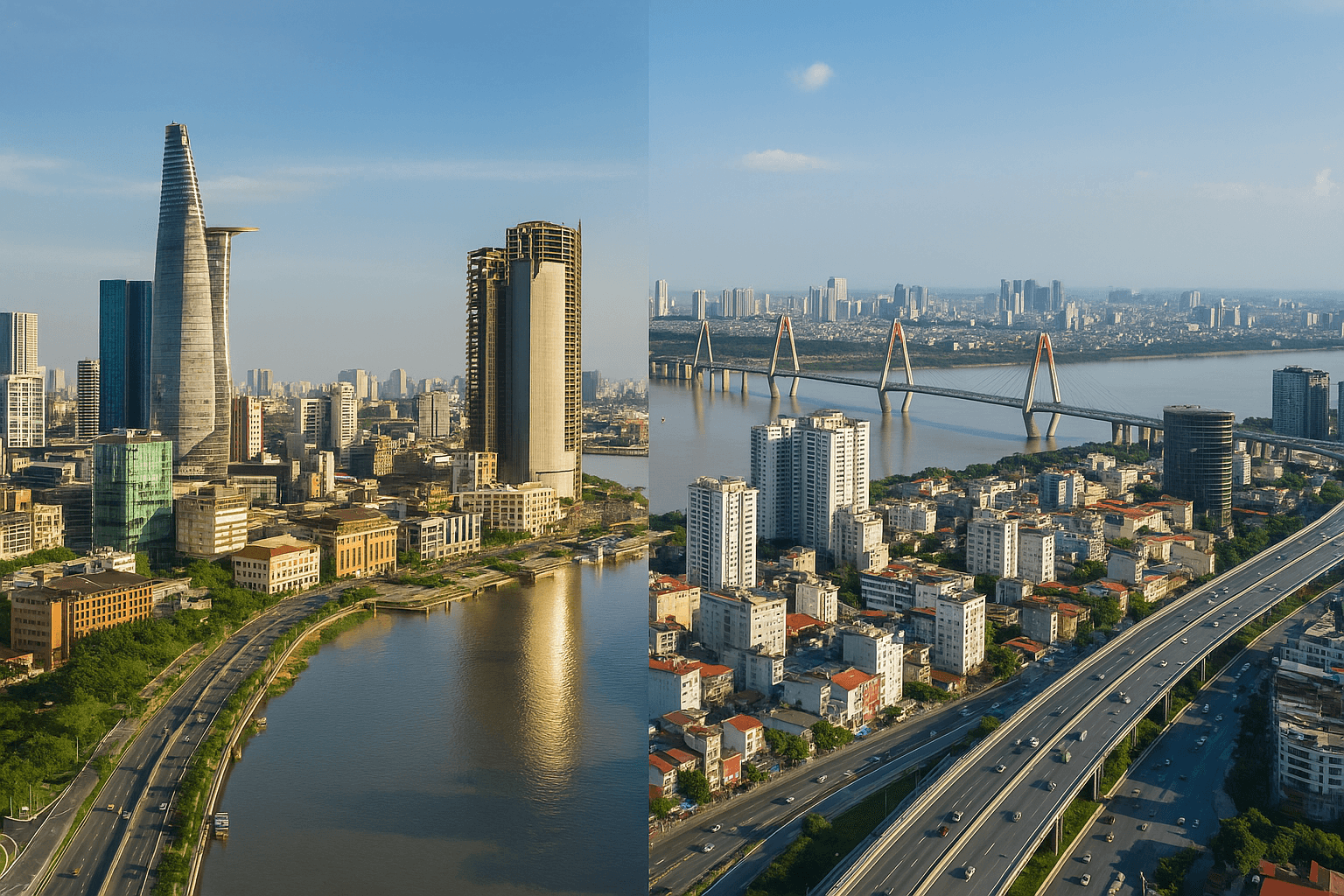
In terms of liquidity, Hanoi currently has the edge, with absorption rates of 60–90% achieved within the first month for many new launches. HCMC's absorption has improved but remains less consistent, depending heavily on specific sub-segments and project locations.
For investors, the right question is not which market to choose, but which segment within each market. Hanoi is better suited to short-to-medium term capital appreciation strategies in districts undergoing urban reclassification. HCMC is more appropriate for long-term investments targeting rental cash flow, benefiting from a larger international tenant pool and a more dynamic business ecosystem.
Heading into the final months of 2026, analysts expect Hanoi to cool somewhat as new supply enters the market, while HCMC continues its steady recovery. The two markets are converging in terms of activity, creating a more diverse and opportunity-rich landscape for investors in the year ahead.
Hanoi vs HCMC — Key figures for 2026
- HANOI PRICE GROWTH 2024
- +18 – 22%
- HCMC PRICE GROWTH 2024
- +5 – 8%
Read more
All news


.jpg&w=3840&q=75)

Book a 1-1 Consultation with KZEN Research
Personalized analysis based on your investment goals. Custom report within 48 hours.